 +49 175 370 2510
 +49 175 370 2510
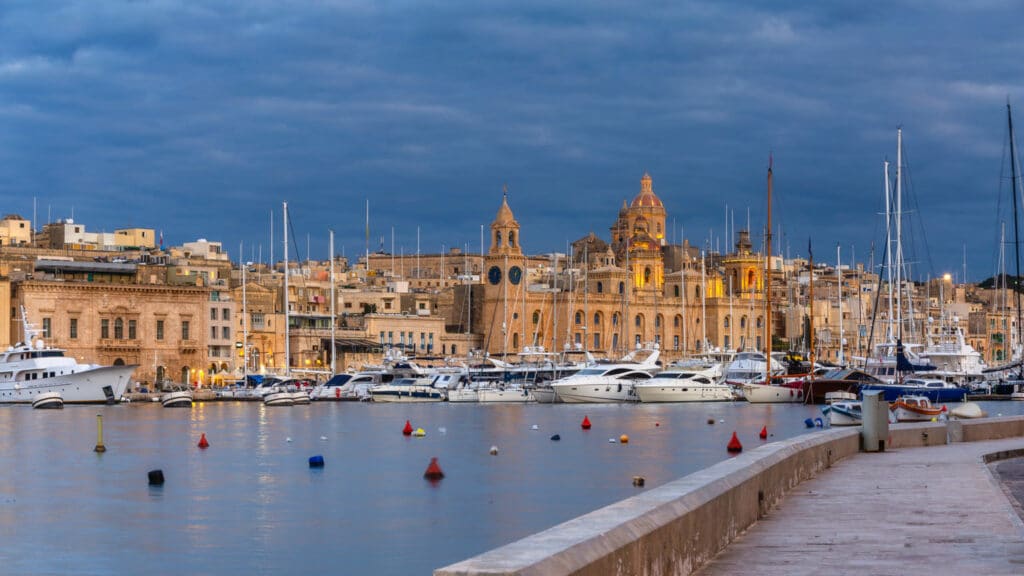
Citizenship Network is pleased to provide a detailed overview of the significant changes forthcoming to Malta’s Permanent Residency Program (MPRP). In case you missed our earlier announcements regarding alterations in investment thresholds and the restructuring of associated fees, we reiterate that these modifications will take effect on January 1st, 2025.
It is important to underscore that current conditions will remain applicable for all applications submitted by December 31st, 2024. The Maltese government will continue to process applications under the existing framework until this deadline.
Key Transformations Ahead
*Financial Requirements and Investment Options*
The revised Malta Permanent Residency Program introduces a dual-track financial qualification system, providing investors with options tailored to their financial portfolios:
– Track 1: Applicants must demonstrate possession of €500,000 in total assets, including €150,000 in liquid financial assets.
– Track 2: Requires proof of €650,000 in total assets with a decreased necessity for €75,000 in liquid financial assets.
Reforms in Property Investment
In an effort to achieve uniformity within the Malta Permanent Residency Program, property investment requirements have been standardized across both Malta and the Gozo islands:
– The property purchase threshold has been elevated to €375,000 nationwide, thereby abolishing previous regional distinctions.
– Annual rental requirements are now uniform at €14,000 across all regions, eliminating regional pricing variations and fostering a more streamlined approach.
Enhanced Fee Structure
The Malta Permanent Residency Program adopts comprehensive adjustments to its fee framework:
– Main applicant administration fees have increased to €50,000, reflecting an increment of €10,000.
Payment Schedule:
– €15,000 is due within one month of submitting the application.
– €35,000 is payable within two months of receiving approval in principle.
Inclusion of Dependents and Associated Costs
The new reforms establish explicit guidelines for including dependents within the Malta Permanent Residency Program:
– A uniform fee of €10,000 applies to all dependents, including spouses, children, parents, and grandparents.
Payment Structure:
– A €5,000 administration fee is due within two months of approval in principle.
– An additional €5,000 contribution must be made within eight months.
– For post-certification additions, both fees must be settled upon application.
– Notably, there is a new age cap of 29 years for unmarried adult-dependent children.
Adjustments in Government Contributions
The Malta Permanent Residency Program mandates a €2,000 increase in government contributions for both investment routes:
– Property Acquisition Path: A €30,000 contribution is required.
– Rental Option: Necessitates a €60,000 contribution.
– The timeframe for payment remains consistent, with an eight-month deadline following approval in principle.
Advantages of Malta’s Program
The Malta Permanent Residency Program continues to attract global investors for several compelling reasons:
– Access to the EU job market.
– Visa-free travel privileges to 172 countries, including the United States, Canada, and Australia.
– Significant tax advantages for residents, especially those attaining non-domiciled status, thereby ensuring taxes are levied only on income earned in Malta.
– A secure, low-crime environment, and an exemplary standard of living.
– Top-tier healthcare and educational facilities.
– A prospering international community of business professionals, investors, and expatriate families.
Beyond the program, Malta presents an enticing proposition with its robust economy, highly regarded passport, rich cultural heritage, and a dynamic island lifestyle, making it a remarkably attractive destination for living and investment endeavors.
Stay informed with Citizenship Network Blog as we continue to deliver updates on the Malta Permanent Residency Program and its evolving landscape.
0 Comments