 +49 175 370 2510
 +49 175 370 2510
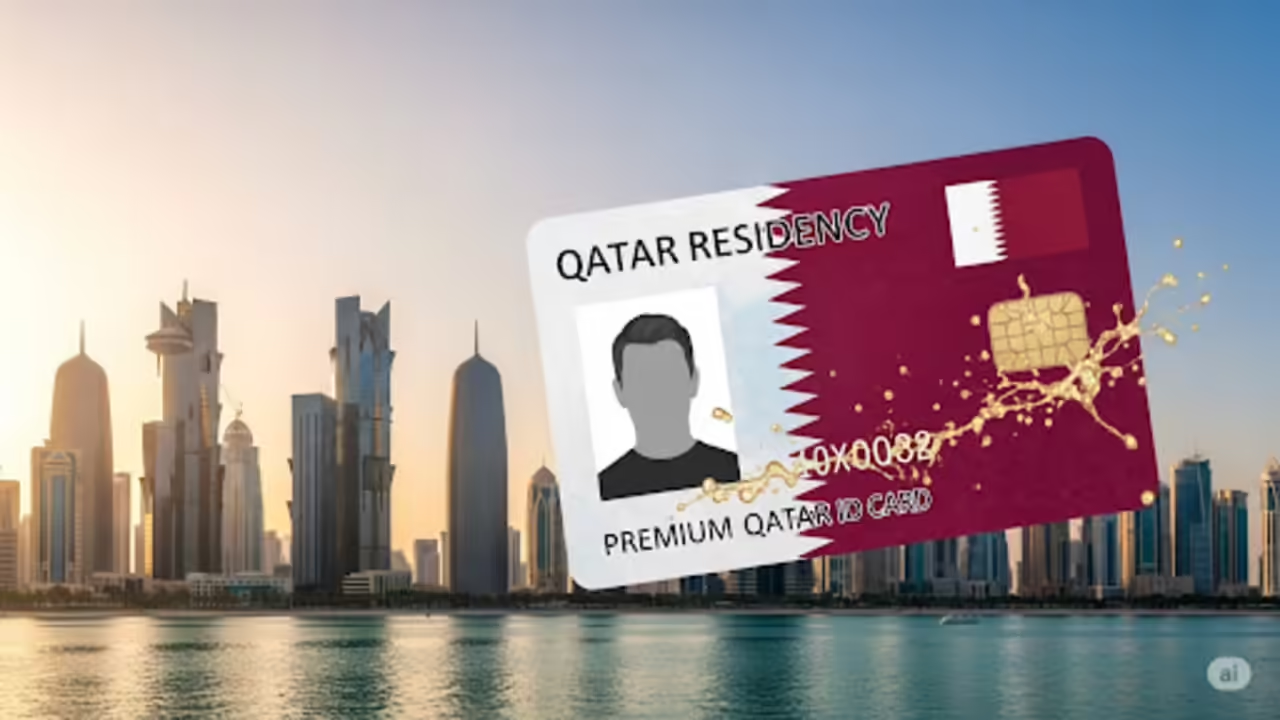
Qatar has opened a far more accessible door to the Gulf with a property-linked residency route starting at about US$200,000 (QAR 730,000). This is a significant drop from the legacy million-dollar threshold and is specifically aimed at energizing the real-estate market while broadening investor participation. The premium US$1 million (QAR 3.65 million) track to permanent residency remains in place, subject to annual caps and additional eligibility criteria.
At Citizenship Network, we’ve summarized the key rules, benefits, and practical steps so investors can move from headline to handshake with confidence. If you’re weighing Qatar alongside the UAE or other GCC options, this guide gives you the verified essentials, linked to official and legal sources.
What changed? For years, the de facto bar for real-estate-linked residency hovered around the million-dollar mark. Qatar now explicitly recognizes a lower QAR 730,000 threshold for a renewable residence permit, making entry far more attainable for mid-tier buyers.
Where You Can Buy: Designated Ownership & Usufruct Zones
Qatar has formally mapped 25 areas where non-Qataris may own freehold or hold 99-year usufruct rights. Notable examples include The Pearl-Qatar, Lusail City, and West Bay districts, each with distinct price points and rental profiles. Always confirm your specific building or plot is inside a qualifying zone before you commit.
What You Get at Each Level
1) Property Residency from QAR 730,000 (~US$200,000)
-
Renewable residency linked to a qualifying real-estate purchase in designated zones.
-
Self-sponsorship flexibility compared to employer-tied permits, useful for investors and founders.
-
Faster processing: authorities have announced title deeds and real-estate residency can be issued within days after registration, a notable efficiency gain for cross-border buyers.
2) Permanent Residency Track from QAR 3,650,000 (~US$1,000,000)
-
Eligibility for permanent residency benefits such as access to public healthcare and education, subject to program rules.
-
Annual cap on the number of PR permits issued.
-
Arabic language proficiency and other statutory criteria apply under Law No. 10 of 2018.
Legal Foundations and Official Thresholds
-
Thresholds recognized by authorities: Qatar’s official guidance and international investment references confirm QAR 730,000 for residency via property and QAR 3,650,000 for the permanent-residency tier.
-
Designated zones and their modalities are set out in official instruction manuals and ministry resources.
-
Permanent Residency law: Law No. 10 of 2018 governs the PR regime, including the annual cap and Arabic proficiency condition.
Step-by-Step: How Investors Typically Proceed
-
Budget & Tier Selection
Decide whether you’re targeting the QAR 730k property residency or the QAR 3.65m PR track. Citizenship Network advises aligning the budget with your long-term family plan, education, and healthcare priorities. Thresholds and benefits are distinct.
-
Zone & Project Verification
Shortlist developments inside eligible freehold/usufruct zones. Check developer approvals and registration pathways to ensure a deed that qualifies for residency.
-
Purchase & Registration
Execute the SPA, complete payment milestones, and register the property. The new process aims to issue title deed + residency within days for qualifying purchases.
-
Residency Application
File the residency request with supporting documents. For PR track applicants, plan ahead for Arabic proficiency and other statutory requirements.
-
Renewal & Compliance
Maintain ownership and keep documents updated to renew the residency permit on time. Citizenship Network monitors renewals and policy updates for clients.
Why Qatar, Why Now?
-
Lower Entry Point: The US$200k route places Qatar among the region’s most accessible investor residencies tied to real estate.
-
Speed: The government’s pledge to issue deeds and residency within days slashes execution risk for cross-border buyers.
-
Strong Legal Backbone: Clear thresholds, designated zones, and a published PR statute reduce ambiguity for institutional and private investors alike.
At Citizenship Network, we translate these advantages into an end-to-end, document-tight process, from zone verification to post-landing renewals.
Frequently Asked Questions
Is the US$200,000 route truly official?
Yes. Qatar’s Ministry of Justice and international investment references recognize QAR 730,000 (~US$200k) property value for residency in designated zones.
How fast can I expect my title deed and residency?
Authorities have announced an accelerated framework where qualifying buyers receive title deed and residency within days of registration. Timelines can vary by file, but this is the new, stated objective.
What about permanent residency at US$1 million?
Investments of QAR 3.65 million (~US$1m) are linked to PR eligibility and expanded public-service benefits. Note the annual cap on PR issuances and Arabic proficiency requirements set by Law No. 10 of 2018.
Do I need an employer sponsor?
Property-based residency in designated zones allows residency without a local sponsor, which is appealing for entrepreneurs and investors.
Which areas qualify?
Qatar lists 25 eligible areas across freehold and 99-year usufruct regimes. Always confirm your specific tower or parcel is inside the designated zone before you sign.
How Citizenship Network Helps
Citizenship Network supports clients through:
-
Pre-qualification and tier mapping to QAR 730k vs QAR 3.65m goals
-
Designated-zone due diligence with developer and project verification
-
Contract, registration, and residency filing with document QA
-
Renewal and compliance services, plus monitoring for policy updates
Our mandate is simple: keep your file accurate, your timeline short, and your outcome aligned with how your family plans to live, learn, and invest in Qatar.
Important Notes and Disclaimers
-
Program mechanics can evolve through ministerial decisions and regulatory circulars. Always cross-check property zoning and valuation at the time of purchase.
-
Permanent residency is a discretionary status with a capped annual quota and statutory requirements including Arabic language proficiency. Eligibility does not guarantee issuance.
Considering Qatar’s new US$200,000 property pathway?
Citizenship Network can evaluate your profile, verify your target property’s eligibility, and run the end-to-end process so you can focus on the investment, not the paperwork.
0 Comments