 +49 175 370 2510
 +49 175 370 2510
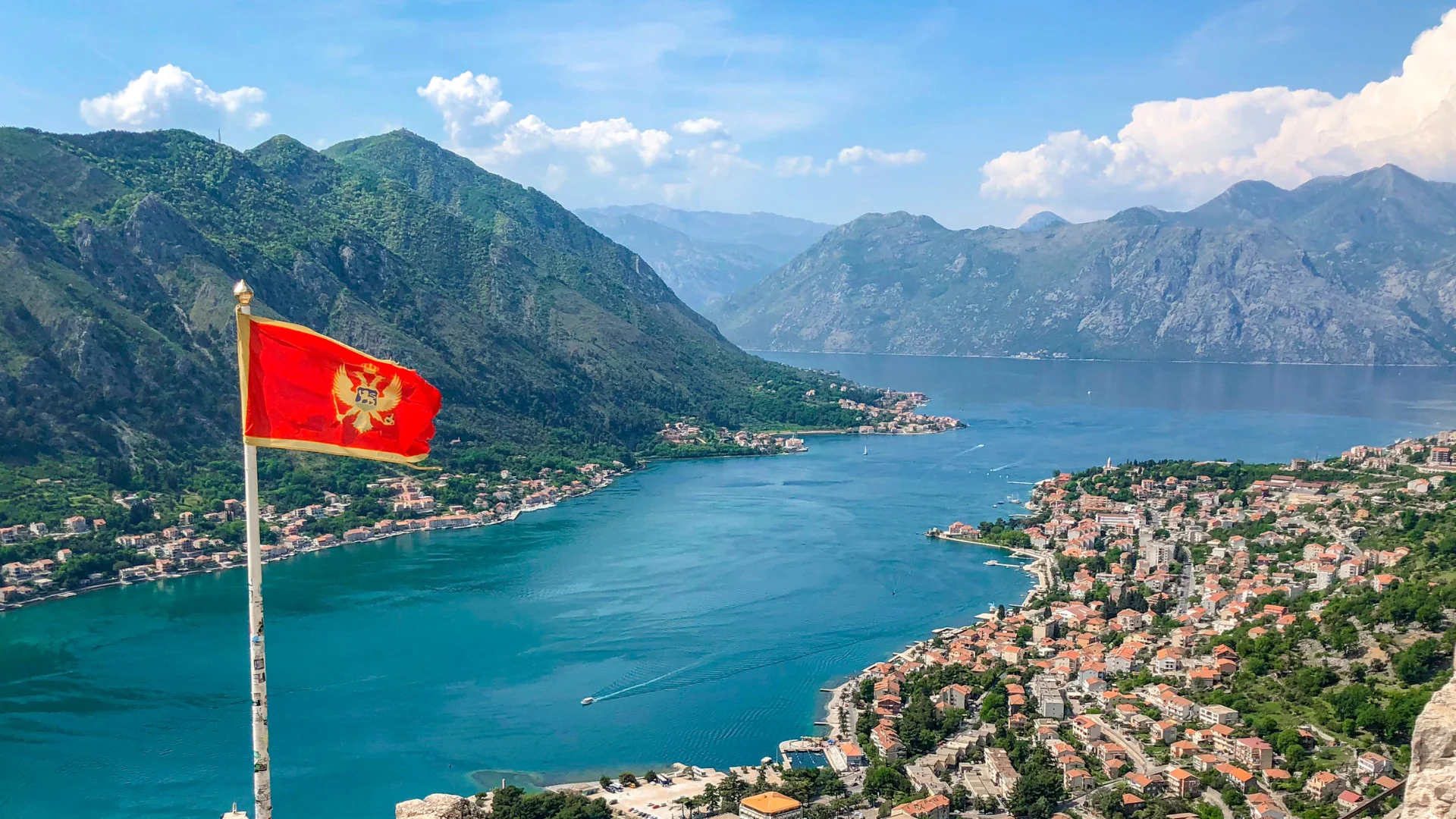
Montenegro has officially reshaped its immigration system. With amendments to the Law on Foreigners adopted at the end of 2025 and effective from January 17, 2026, the country has introduced a structured property-linked residency pathway and tightened tax rules for foreign business owners.
For investors and global families exploring European relocation options, this is a significant development. At Citizenship Network, we break down what has changed, what it means in practice, and whether Montenegro’s new framework presents a serious long-term opportunity.
Montenegro Introduces a €150,000 Property-Based Residency Threshold
The most important change is clear and measurable:
Third-country nationals applying for temporary residence based on real estate ownership must now own property with a minimum taxable value of €150,000.
The value is determined by Montenegro’s Tax Authority through the official property transfer tax assessment.
Why This Matters
Previously, Montenegro allowed property-based residence without a legally defined minimum investment threshold. The new law formalizes the route and transforms it into a structured, predictable residency-by-investment model.
At Citizenship Network, we view this as a shift from a loosely regulated pathway to a clearly defined legal framework — something serious investors prefer.
Key Conditions for Property-Based Residence
Under the new rules, applicants must:
-
Prove legal ownership of the property
-
Demonstrate actual use of the property
-
Settle all property tax obligations
-
Maintain compliance with Montenegrin law
Important Limitations
-
The residence permit is temporary, valid for one year
-
It is renewable
-
It does not allow employment or business activity in Montenegro
This is a passive residency option — not a work permit.
Why €150,000 Instead of €200,000?
The government initially proposed a €200,000 minimum threshold in earlier legislative discussions. After parliamentary debate, lawmakers reduced the requirement to €150,000.
This lower threshold broadens eligibility and keeps Montenegro competitive compared to other European property-based residence programs.
From a strategic standpoint, Montenegro positions itself as a mid-tier European residency option — affordable, but structured.
Grandfathering Clause: What About Existing Residents?
Foreign nationals who obtained property-based residence before January 17, 2026 are grandfathered in.
They can renew their permits without meeting the new €150,000 valuation requirement.
This provides legal continuity and protects earlier investors.
Path to Montenegro Citizenship
Montenegro’s standard naturalization route remains unchanged:
-
5 years of temporary residence
-
5 additional years of permanent residence
-
Total: 10 years of continuous legal stay
However, Montenegro does not recognize dual citizenship in most cases.
This is a critical consideration. At Citizenship Network, we advise clients to evaluate citizenship implications carefully before planning a long-term strategy.
New €5,000 Minimum Tax Rule for Foreign Business Owners
The second major reform targets foreign entrepreneurs.
Executive directors and registered entrepreneurs who personally own more than 51% of a Montenegrin company must now ensure that their company has paid at least:
€5,000 annually in taxes and social contributions
Otherwise, they cannot extend their integrated work and residence permit.
Why Was This Introduced?
Authorities stated that some foreign nationals were establishing companies with minimal or no economic activity solely to secure residence permits.
The €5,000 tax floor introduces a measurable compliance benchmark.
This reform signals a broader shift: Montenegro wants genuine economic participation, not paper companies.
Who Is Exempt From the €5,000 Tax Requirement?
The tax floor does not apply to:
-
EU citizens
-
Citizens of Iceland, Norway, Liechtenstein, and Switzerland
-
Permanent residents
-
Shareholders owning less than 51%
-
Applicants residing on other grounds (e.g., family reunification)
Additionally, the law explicitly recognizes same-sex partners within family reunification provisions — a progressive clarification in regional terms.
The Shadow of Montenegro’s Closed Citizenship-by-Investment Program
Montenegro’s new property-based residence route emerges after the closure of its former Citizenship by Investment Program (CIP).
Launched in 2019, the CIP offered citizenship in exchange for:
-
€450,000 property investment in coastal/capital areas OR
-
€250,000 in northern regions
-
Plus a €200,000 government donation
The program attracted approximately 1,100 applications and generated over €400 million in investment before closing in 2022.
Why did it end?
Sustained pressure from the European Union, particularly due to concerns surrounding citizenship-by-investment schemes in candidate countries.
At Citizenship Network, we see the new property residency route as a politically safer alternative — residency rather than direct citizenship.
EU Accession: The Bigger Strategic Question
Montenegro has been in EU accession talks since 2012 and is considered the most advanced Western Balkans candidate.
Government officials have expressed expectations of potential EU membership by 2028.
If Montenegro joins the EU, its residence status could become significantly more valuable.
However, two open questions remain:
-
Will Montenegro secure EU membership by 2028?
-
Would the EU permit continuation of property-linked residence programs under full membership?
The European Commission has previously challenged similar frameworks in Malta and Cyprus.
Investors should therefore view Montenegro as a strategic, medium-term opportunity — not a guaranteed EU backdoor.
Is Montenegro’s €150,000 Property Residency Worth It?
From a purely structural perspective:
Advantages
-
Defined legal framework
-
Lower investment threshold compared to many European programs
-
Renewable residence status
-
Potential long-term EU upside
Limitations
-
No work authorization
-
10-year path to citizenship
-
No general dual nationality
-
EU accession uncertainty
This is not a quick citizenship solution. It is a residence positioning strategy.
Final Thoughts from Citizenship Network
Montenegro’s 2026 reforms mark a transition from flexible practices to codified investment migration policy.
The €150,000 property threshold and €5,000 corporate tax requirement show that the country is prioritizing compliance, transparency, and economic substance.
For clients considering Balkan or future EU-oriented residency planning, Montenegro may represent a cost-effective entry point — but only with clear expectations.
At Citizenship Network, we advise investors to evaluate:
-
Long-term mobility goals
-
Tax implications
-
Citizenship strategy
-
EU accession timelines
-
Exit strategy
Montenegro is evolving. The opportunity is real — but it requires a structured approach.
If you are considering Montenegro residency or comparing European residence-by-investment options, Citizenship Network can provide strategic analysis tailored to your global mobility objectives.
0 Comments