 +49 175 370 2510
 +49 175 370 2510
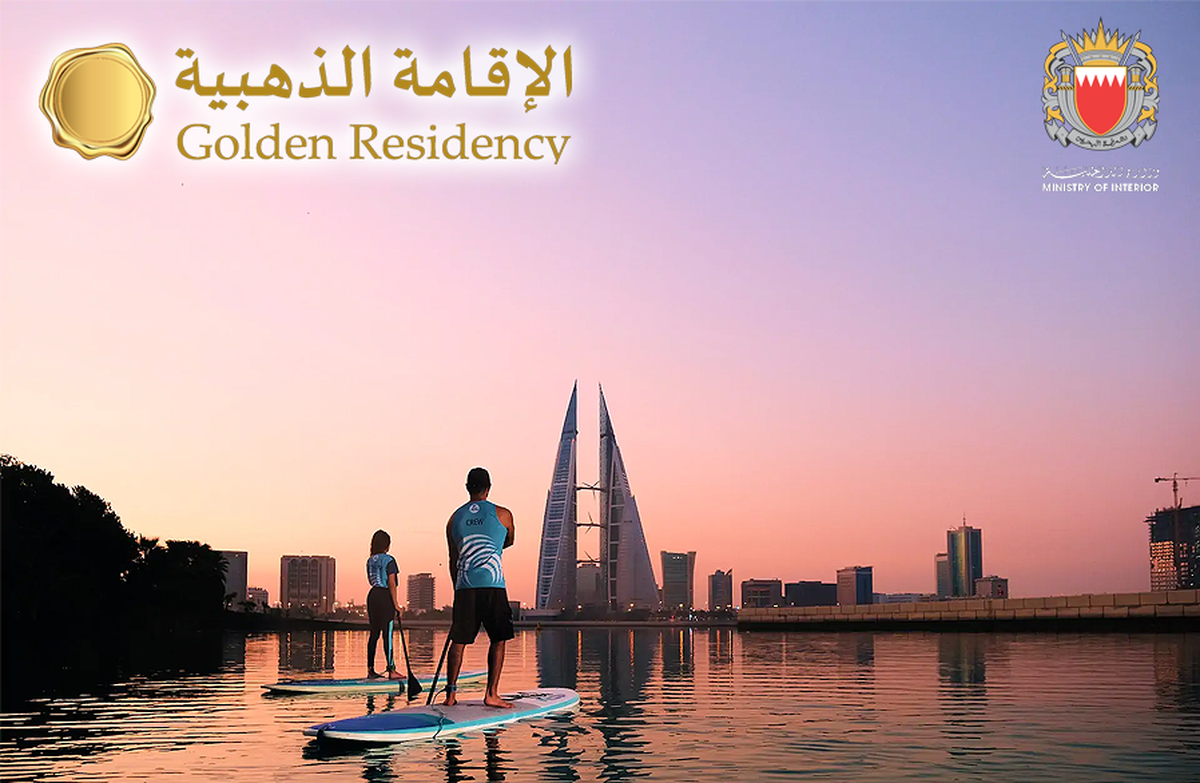
Bahrain has quietly made one of the most investor-friendly moves in the Gulf in 2025: it has cut the real estate threshold for its Golden Residency by 35%, from BHD 200,000 (≈US$530,555) to BHD 130,000 (≈US$345,000).
For international investors and families planning a GCC residency by investment strategy, this is a meaningful shift. At Citizenship Network, we see this change as part of a broader regional competition to attract long-term residents, entrepreneurs, and high-net-worth individuals.
Below is a practical breakdown of what has changed, how Bahrain compares to its neighbours, and how this fits into a wider residency and citizenship plan.
What Exactly Has Changed in Bahrain?
Bahrain’s Nationality, Passports and Residence Affairs (NPRA) at the Ministry of Interior announced that the minimum property investment required to qualify for the Golden Residency route has been reduced to BHD 130,000.
Key points:
-
Old threshold: BHD 200,000 (~US$530,555)
-
New threshold: BHD 130,000 (~US$345,000)
-
Reduction: Around 35%, making the program more accessible to a wider investor base.
The Golden Residency itself is a long-term, renewable residence visa (typically 10 years) that can include rights such as working in Bahrain and sponsoring eligible family members.
Government officials have framed this move as:
-
A way to boost Bahrain’s competitiveness as a residency and investment hub
-
A tool to support real estate demand and attract long-term capital
-
A signal that the kingdom is serious about offering stability for international investors
For Citizenship Network clients, this lower entry point makes Bahrain a more realistic option to combine with other residency or citizenship programs in Europe, the UK, or the Caribbean.
How Bahrain Now Compares Within the GCC
The Gulf region has become one of the most active markets for “golden visas” and long-term residency schemes, with each country positioning itself slightly differently.
Here’s where Bahrain sits after the threshold cut:
1. UAE – Flagship Golden Visa, Higher Real Estate Requirement
The UAE Golden Visa is still the best-known brand globally, especially Dubai’s real estate-led route.
-
For the 10-year property-based Golden Visa, the standard requirement is AED 2,000,000 (≈US$544,000) in qualifying real estate.
-
Some innovation / incubator routes exist at AED 500,000 (≈US$136,000), but these are linked to specific business/innovation criteria – not simple property purchases.
Implication for investors:
On a pure “buy property, get long-term residency” basis, Bahrain’s new US$345,000 level is now below the UAE’s mainstream AED 2m requirement.
2. Oman – Investor Residency with Higher Property Thresholds
Oman has entered the golden visa race with a 10-year Investor Residency / Golden Residency framework:
-
Real estate-focused routes typically start around RO 200,000 (≈US$520,000) for long-term residency, with some tiers going higher depending on duration and investment category.
Compared to Oman, Bahrain:
-
Requires significantly less capital for a real estate-based route
-
Offers similar 10-year long-term residency positioning, but at a lower ticket size
3. Saudi Arabia – Premium Residency at the Top End
Saudi Arabia’s Premium Residency (often called the “Saudi golden visa”) remains the most expensive in the region on a property basis:
-
The real estate route generally requires acquiring residential property worth at least SAR 4 million (≈US$1.1 million), mortgage-free and fully developed.
Saudi Arabia targets investors who:
-
Want exposure to the kingdom’s large and fast-growing economy
-
Are comfortable with a higher capital commitment for residency and business privileges
Against this backdrop, Bahrain’s US$345,000 threshold is deliberately positioned as a mid-range, more accessible entry point for investors who want Gulf exposure without committing seven figures.
4. Kuwait – New Golden Visa, No Fixed Minimum
Kuwait is the newest GCC country to launch a long-term investor residency / “Golden Visa” framework:
-
Offers 10- and 15-year residency options for investors and property owners
-
No fixed minimum investment figure is written into the law; applications are assessed case-by-case on economic substance and project quality.
While Kuwait may attract very large investments in practice, Bahrain’s move to a clear, published threshold at BHD 130,000 gives investors pricing transparency that Kuwait currently does not.
Why Bahrain’s Cut Matters Strategically
From the perspective of Citizenship Network clients, the reduction in Bahrain’s property requirement is important for several reasons:
1. Lower Capital, Still in a Stable Gulf Jurisdiction
With BHD 130,000 (≈US$345,000) as the minimum:
-
Investors can access 10-year renewable residency in a GCC financial centre, at a capital level that is lower than Oman and Saudi Arabia and below the mainstream UAE property route.
-
Bahrain’s long-standing positioning as a regional financial and services hub strengthens the case for using it as a base for business operations and regional mobility.
2. More Options for Portfolio-Style Planning
Many Citizenship Network clients today don’t just choose one residency or citizenship program. They build a portfolio:
-
A GCC base (UAE, Bahrain, Oman, Saudi, or Kuwait) for regional business and tax-planning reasons
-
An EU residency or citizenship route (Portugal, Greece, Cyprus, Malta, etc.)
-
Possibly a Caribbean or Türkiye citizenship by investment as a fast second passport
With the new threshold, Bahrain becomes easier to slot into such a multi-jurisdiction plan, especially when combined with:
-
An EU residency (for Schengen access and a future EU passport)
-
A Caribbean CBI passport (for quick global mobility)
3. Real Estate as a Gateway, Not Just an Asset
Because the Bahrain Golden Residency is tied to real estate investment, you are combining:
-
A hard asset (property in Bahrain)
-
With immigration benefits (long-term residency, family stability, local banking access)
For some profiles, this is more attractive than purely financial routes because it anchors capital in a tangible asset within the Gulf.
Is Bahrain’s Golden Residency Right for You?
Whether Bahrain fits your strategy depends on your primary objective:
-
If you want a GCC base with moderate capital outlay, Bahrain’s reduced threshold is now very competitive.
-
If your focus is maximum global mobility in the shortest time, a direct citizenship route (Caribbean, Türkiye) may still be the first step, with Bahrain as a secondary residency.
-
If you want long-term regional presence plus business access, Bahrain’s program sits in a sweet spot between cost and credibility.
At Citizenship Network, we evaluate Bahrain in the context of your entire global plan, not in isolation. That means looking at:
-
Your existing or planned EU, UK, or North American status
-
Tax residence and business location considerations
-
Family needs (schooling, healthcare, succession)
-
Your risk appetite and time horizon
How Citizenship Network Can Help
The GCC landscape – UAE Golden Visa, Bahrain Golden Residency, Oman Investor Residency, Saudi Premium Residency, Kuwait’s new long-term visas – is now complex and fast-moving.
Citizenship Network supports you by:
-
Comparing GCC residency options side by side (thresholds, rights, timelines)
-
Mapping how Bahrain’s new pricing fits with your EU, Caribbean, or Türkiye plans
-
Coordinating with local partners to ensure accurate eligibility checks and compliant structuring
-
Building a layered strategy: one residence for lifestyle, another for business, and one or more passports for long-term security
If you are considering adding the Bahrain Golden Residency to your global residency and citizenship strategy, Citizenship Network can help you model different scenarios and decide whether this new US$345,000 threshold is the right move – on its own or as part of a broader plan.
0 Comments